
Structured Cabling & Network Wiring in Calgary
Alberta's experts in network cabling — pulls and termination of any data or A/V cable for your home or business.
OVERVIEW
One Stop for Every Cable in the Building
Structured cabling is the part of a building nobody looks at until it stops working. Done properly it lasts decades and every change afterwards is easy. Done badly it becomes a permanent tax on every trade who comes after.
The PROS is a one stop shop for pulls and termination of any data network or A/V cable for your home or business. We pull it, terminate it, test it, label it at both ends, and hand over documentation showing what lands where.
That applies at any scale — a handful of drops in a house through to server room and MDF/IDF buildouts across multi-site commercial projects.
CABLE TYPES
Cables We Run
If it is low voltage and it goes in a wall, we pull it and we terminate it.
Data & Network
Fibre Optic
Security & Control
Audio & Video
TIMING
New Construction vs. Retrofit
New Construction
The cheapest cabling you will ever install is the cable that goes in before the drywall.
- Every room gets wired whether or not it is needed yet
- Conduit and pull strings left in for future runs
- No patching, no drywall repair, no paint
- Coordinated around the other trades' schedules
- As-built drawings delivered at turnover
Existing Buildings
Retrofit is most of what we do, and doing it cleanly is the whole skill.
- Existing pathways, chases, and ceilings used first
- Minimal, planned drywall openings where needed
- Patch and paint-ready finish on anything we open
- Live sites worked around business hours where required
- Existing infrastructure assessed before anything is replaced
Included on Every Cabling Job
- Cable pulled to code and to manufacturer bend radius
- Termination at patch panel, jack, or keystone
- Certification testing on every data run
- Labelling at both ends of every cable
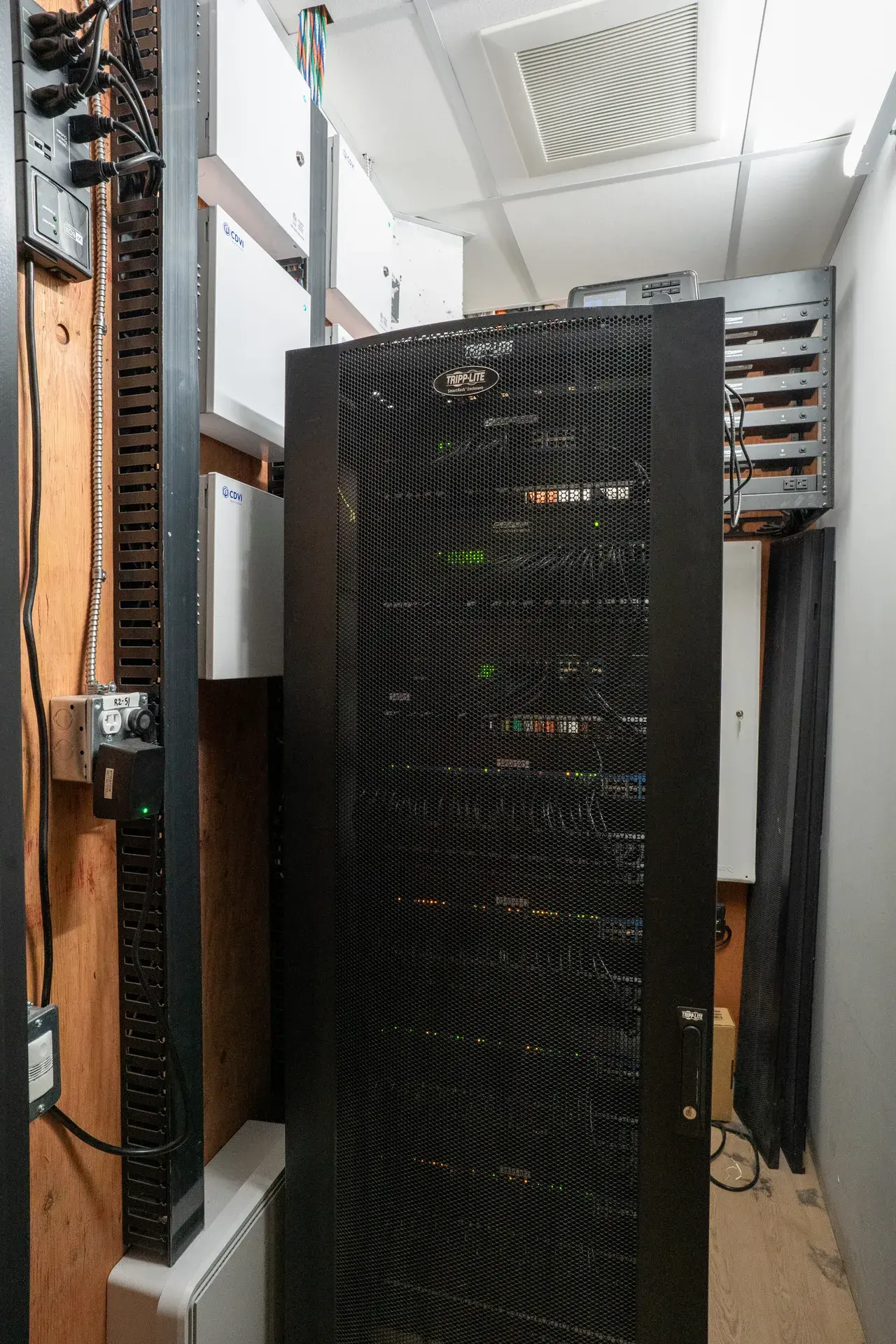
- Server room, MDF, and IDF rack build and dress
- WiFi access point placement planned with the cable layout
- Cable management, velcro dressing, and tidy service loops
- As-built documentation handed over at completion
Labels Are Not Optional
Every run we install is labelled at both ends and recorded in the turnover package. It costs us a little time on the day and saves whoever troubleshoots the building next — often us, sometimes not — hours of tracing cable through a ceiling.
Common Questions
For most homes and small offices, Cat6 is more than enough and will be for a long time. Cat6a is worth the extra on runs near the 100 m limit, on anything feeding high-density WiFi access points, and on commercial backbone where you want headroom. We recommend per run rather than blanket-upgrading everything.
Yes — single mode and multimode, including termination and testing. Fibre is typically used for building-to-building runs, long backbone between IDFs, and anywhere the distance exceeds what copper will carry.
This is one of our most common commercial jobs. We re-dress the rack, replace failed or unlabelled runs, document what is actually connected, and hand back a room where the next change takes minutes instead of an afternoon.
Every data run is tested and the results form part of the turnover package. A cable that terminates neatly and still fails certification is a cable that will cause an intermittent fault six months from now.
RELATED
You Might Also Need
Networking & WiFi
Enterprise WiFi and wired infrastructure that holds up under a full floor of users.
Access Control
Whether it's one room or a whole building, we build safe, secure, code-compliant access control.
Smart Office
Buildings that run themselves after hours, and cost less to run during them.
Ready to Talk About Structured Cabling?
Free site walkthrough, detailed quote, and a timeline — usually within 48 hours.